
Article written by AgroParisTech Service Etudes.
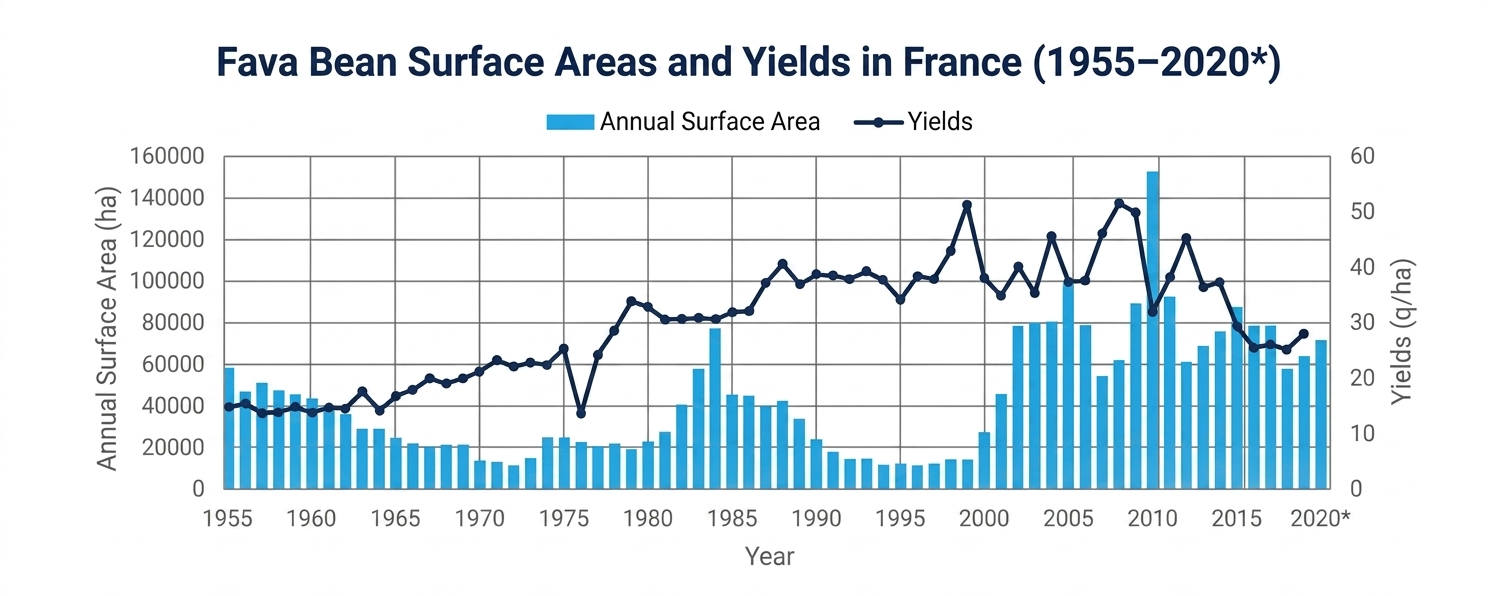
Since 2010, France has seen a marked increase in pulse crop production areas (2% of French Utilised Agricultural Area in 2019 according to France AgriMer), alongside a stagnation or even a decline in yields. Yet the agronomic and economic value of these crops is encouraging more and more farmers to integrate them into their rotations. They also represent a preferred route to reduce dependence on animal proteins. This is the focus of the Plan Protéines launched by the French government as part of the national recovery plan.
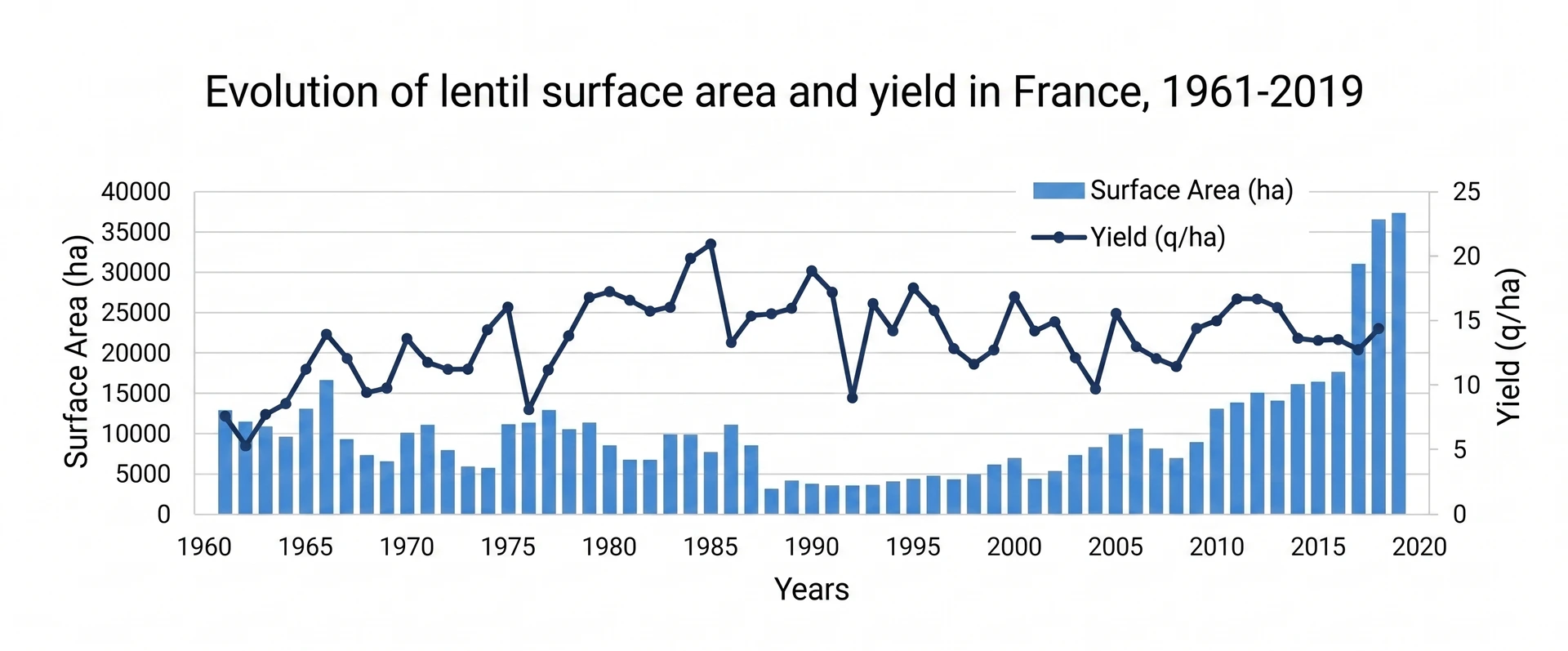
In France, lentils and faba beans are two leading pulse crops: the bruchid beetle is their main threat. In the event of infestation, treatment at storage is essential to meet commercial requirements. For human consumption, the health and safety standard sets the limit of bruchid-damaged grains at 3%. In this article, we will look at the measures to put in place to minimise this risk and protect your harvest.
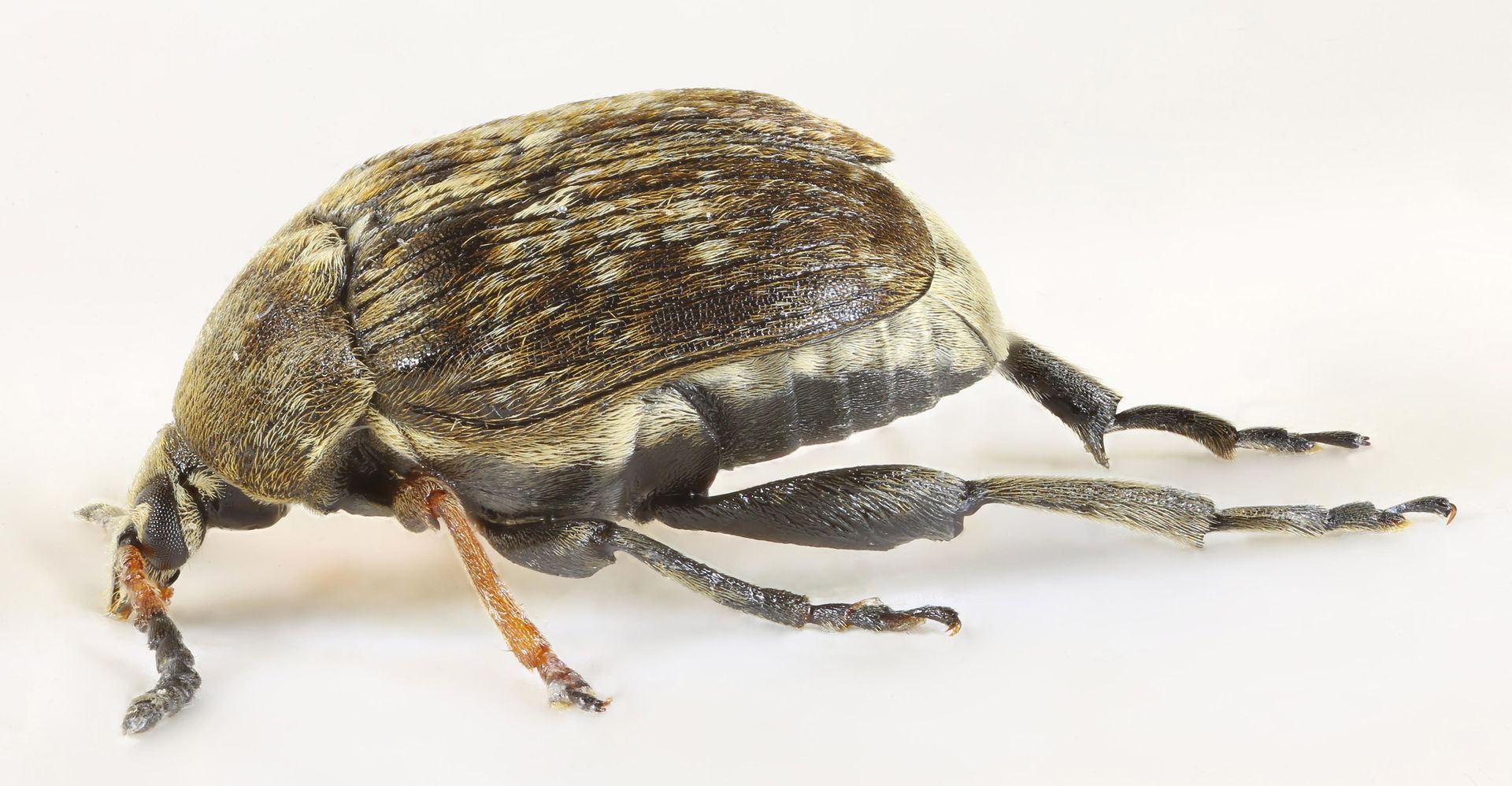
What is the bruchid beetle?
The bruchid is a beetle that lays its eggs inside the pods. Its larvae develop throughout the crop cycle. A large proportion of bruchids emerge from the grains shortly after harvest, once they reach the adult stage, to reach nearby breeding sites. They can then overwinter and infest the following year's crops.
It is important to note that the bruchid reproduces only once per year, emerges from the grains only once larval development is complete, and does not attack grains during storage. Bruchid control therefore differs from that of other pest insects (cereal pests in particular).
In the field, only a spray treatment with a lambda-cyhalothrin-based insecticide is authorised at flowering, which corresponds to the crop infestation period. However, this active substance has a negative effect on pollinating insects and must be applied in their absence, which further reduces the window for action.
Storage control methods
Bruchid control takes place mainly at storage, in two stages:
Harvest early (15 to 20% moisture content) to trap bruchids inside the grains, then dry and ventilate with hot air to bring moisture down to 14%.
Eliminate bruchids at storage immediately afterwards, before they emerge, damage the visual quality of the seeds, and infest the surrounding area.
Below, we cover 6 elimination methods.
Phosphine fumigation (conventional)
Phosphine fumigation is 100% effective at killing adult bruchids and larvae: phosphine (PH3) is introduced into a sealed enclosure for at least 10 days. This method leaves no residue on the grains. However, it requires a dedicated, fully hermetic installation and certified operators (phosphine is a substance hazardous to humans). After treatment, the dead larvae remain inside the grains. This reduces the rate of pierced grains, but not the rate of bruchid-damaged grains.
Insecticide: K-Obiol© ULV 6 (conventional)
The insecticide K-Obiol© ULV 6 (deltamethrin and piperonyl butoxide) is a contact and ingestion insecticide applied by nebulisation. It is the only insecticide authorised on pulse crops at storage. Its effectiveness against the bruchid is close to 100%, with a persistence of action of at least 6 months. The grains must be allowed to warm up so that treatment can take place at the same time as bruchid emergence. This curative solution does, however, leave detectable residues on the seed, although within European regulatory limits.
Dryer: hot air heating at 50°C (organic)
Hot air heating quickly brings grain moisture down to 14% and also kills bruchids (including larvae inside the grains, through thermal shock). Be careful: drying that is too hot or too rapid can damage the seeds, so the temperature must remain between 50°C and 70°C.
Freezing (organic)
The grains are cooled to a temperature of -20°C for 4 to 5 weeks, which is lethal to bruchids. This solution requires a freezer and is not suitable for treating large volumes. In France, this solution is generally offered by service providers.
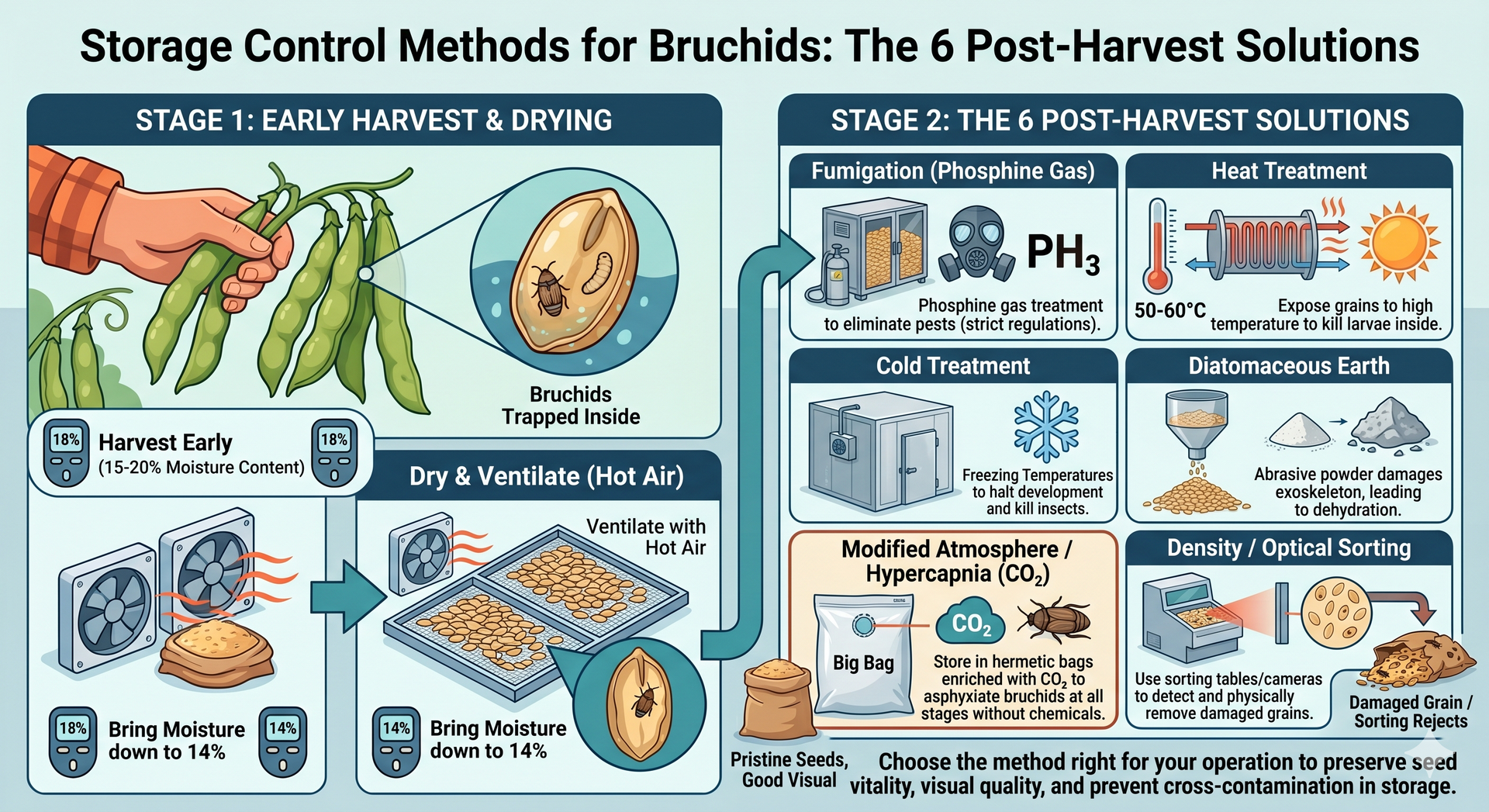
Modified Atmosphere storage (organic)
After harvest, the seeds are placed in a fully hermetic environment with carbon dioxide injection. The creation of a modified atmosphere with a high carbon dioxide concentration results in the complete mortality of insects. Adult bruchids are eliminated after 48 hours. Up to 21 days are required to achieve complete mortality of hidden forms and earlier life stages (eggs, nymphs, larvae, potentially located inside the grains). This method leaves no residue and can be deployed in hermetic silos or big bags.
Storage treatment to meet commercial criteria (absence of live insects) does not reduce the rate of bruchid-damaged grains as such, but remains necessary to limit infestation in production areas. A sorting and cleaning operation is recommended before marketing, in order to remove dead insect debris.
Other storage control techniques exist:
toasting (for animal feed only, cooking the grain at 280°C).
diatomaceous earth (causes lethal micro-cuts in the insect, but this solution is not suitable for large volumes).
microwave radiation (costly, with few operational installations).
A promising technique: companion cropping in open field
Companion cropping is based on several principles of alternative control: olfactory disruption, support for beneficial insects, and the decoy effect. These techniques are still little used and are still being documented in France.
For faba beans, binary association with cereals helps attract beneficial insects (results observed using oats or barley). In addition, the faba bean/forage pea association could disrupt the olfactory recognition of bruchids, which then attack the peas (decoy effect).
For lentils, some field observations made by producers suggest that buckwheat and rye, when grown in association with lentils, may help reduce bruchid pressure. Finally, growing lentillon de Champagne (which flowers 2 to 3 weeks earlier than traditional lentils) is thought to shift the crop's sensitive stage relative to the bruchid development cycle.

Key takeaways
Pulse crops have a bright future ahead. However, the bruchid is a major threat whose progression is driven by climate warming, the increase in pulse crop areas in France, and the development of resistance to certain insecticides.
In bruchid control, the following must be taken into account:
the withdrawal of certain active substances;
changes in the number of authorised interventions to control bruchids;
the regulation of intervention conditions for carrying out treatment;
the long period of crop sensitivity (flowering and pod formation period).
In the event of infestation, storage treatment to eliminate bruchids is essential. The crop must be harvested early to keep bruchids trapped inside the seeds, then they must be eliminated using conventional methods (phosphine fumigation, K-Obiol© ULV 6) or organic-compatible methods (heating, freezing, modified atmosphere).
Finally, companion cropping is a promising avenue for reducing bruchid pressure at field level. This technique is beginning to be documented in France but remains uncommon.
Further reading
TERRE UNIVIA, TERRE INOVIA, juin 2015, Lutte contre les bruches de la féverole au stockage, fiche technique.
PIERRE LANTRIN, INRAE, juin 2020, Traque aux pratiques innovantes en fermes pour la maîtrise des population et/ou dégâts de bruches sur féveroles et lentilles, Mémoire.
Replay du webinaire Proléobio 22/03/2021 : faisabilité technico-économique des lentilles.