Liquid CO₂
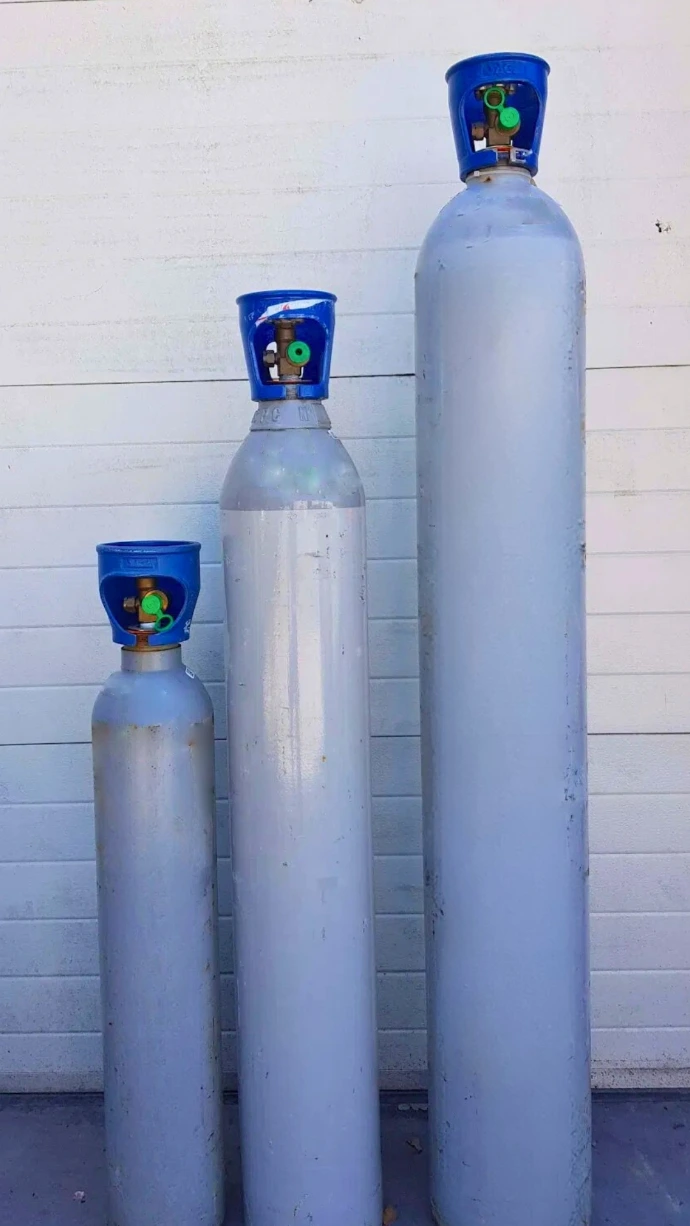
Liquid CO₂ for reliable continuous supply, available in cylinders, racks, or tanks.
There are different sizes of bottles and containers, but the connectors are standardized.
Each supplier generally has its own network of depots.Prices and commercial conditions vary from sector to sector.
Gas use for agricultural storage may be regulated. Check local regulations before use.
Containers are rented on a consignment basis and must be returned at the end of their useful life.
Rental charges are billed monthly and are proportional to the length of time the containers are out of service.
Gas remaining in non-empty returned containers is non-refundable.
Request written proof of return from the carrier or custodian.
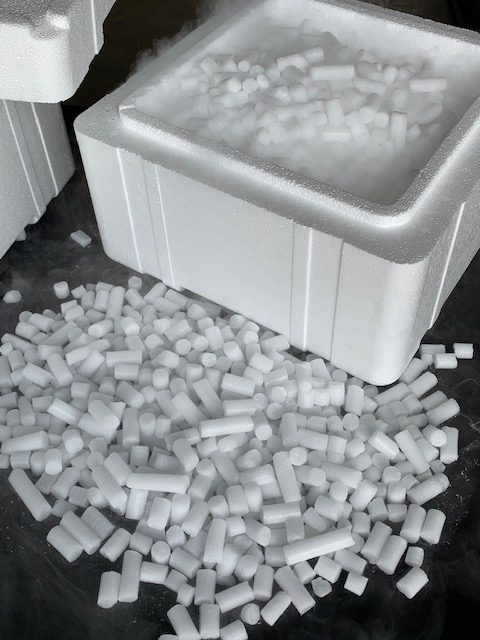
Solid CO₂ (dry ice)
Dry ice is the solid form of CO₂. It contains no water and leaves no residue when it melts.
Gas use for agricultural storage may be regulated. Check local regulations before use.
Avoid direct contact with the grain.
Always wear protective gloves & goggles, and use a shovel for handling (risk of cold burns).
Mass loss due to evaporation is around 2 kg / 24h / 10 kg.
To limit this phenomenon, keep dry ice cool in its original packaging, and do not open before use.
Environmental impact
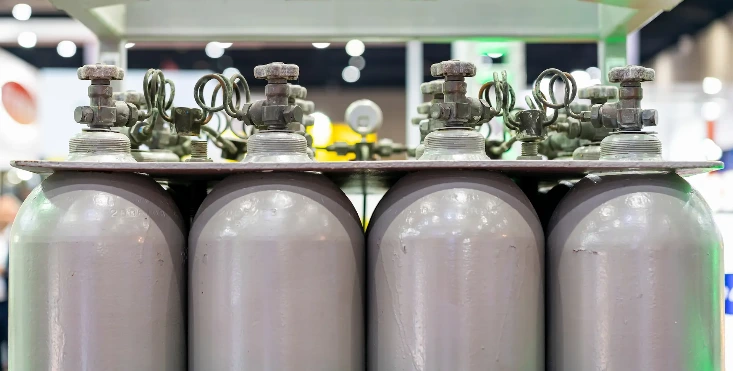
CO₂ capture is the International Energy Agency's third priority for reducing the concentration of greenhouse gases in the atmosphere.
It involves capturing CO₂ emissions generated by industry, for use in other applications.
Instead of being directly released into the atmosphere by industrials, CO₂ is recovered, packaged and marketed by gas suppliers, giving it a new purpose.
On top of this initial dose, a maintenance top-up may be required to compensate for grain respiration and micro-leaks throughout the treatment period.
The exact amount of CO₂ to add depends on the type of product to be stored and the hermetic enclosure used. To simplify this estimation, we provide an online filling calculator (accessible from the user support page) which guarantees optimal dosing in just a few clicks.
Supply conditions and the regulations applicable to CO₂ may vary from one country to another. Find out about local specificities before any implementation.
- choosing a dedicated, adequately ventilated operating area
- operators awareness
- clear preventive signage
- mobile CO₂ detection on operators
- fixed CO₂ detection in the operating zone (at low points)
- ventilation of the operating area air renewal.
We can support you in implementing all these points.
Recommendations or framework for regulatory use vary from country to country.
Want to learn more?
Explore our articles for practical advice, answers and additional insights.