Key factors affecting CO₂ inerting efficacy: temperature, concentration and exposure time
The main factors influencing the effectiveness of inerting with carbon dioxide (CO₂) or possibly with nitrogen (N₂), are:
- grain temperature
- gas concentration (CO₂) on injection into the charged container
- inerting maintenance time
- the species of insect to be eradicated.
The influence of each of these factors on inert gas efficiency has been studied by numerous research teams in all developed countries producing cereals, oilseeds and pulses (Australia, USA, Canada, Israel, Germany, UK, Italy, Spain, Portugal and France). Today, we have robust scales guaranteeing the efficacy of disinsectisation using the two most commonly used inert gases (CO₂ and N₂) for the disinsectisation of 'organic' seeds, legumes and field cereals under AB or quality label schemes.
To help you understand the best practices for effective disinsectisation using CO₂, the effect of each of the four factors determining disinsectisation efficiency is shown in the following graphs.
Effect of temperature on insect mortality rate.
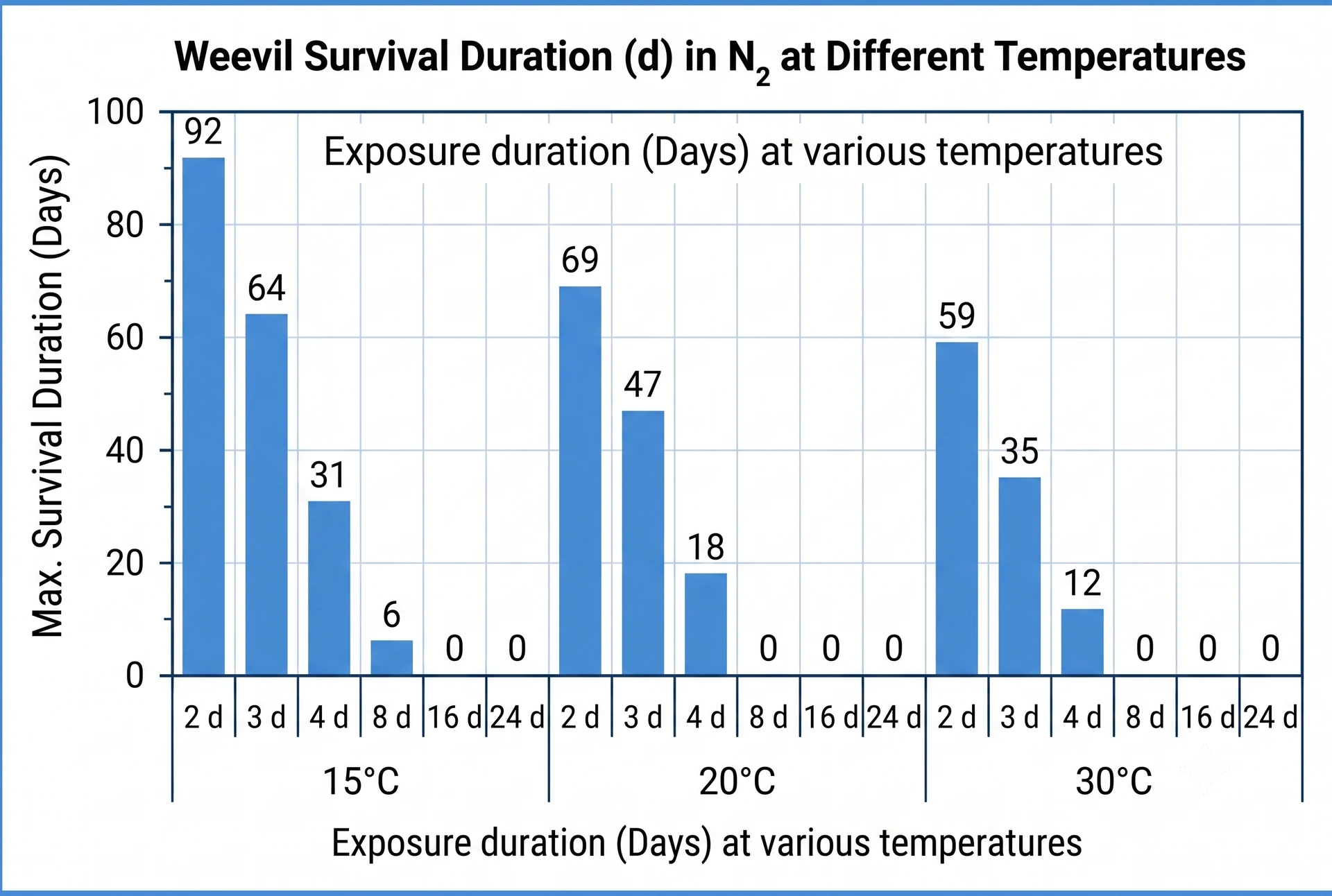
Effect of temperature on the mortality rate of adult rice weevils kept in an inert atmosphere of pure nitrogen (data from Fleurat-Lessard and Le Torc'h, 1991).
Influence of CO₂ content on the lethal exposure time (LD99) of the weevil and a Chinese bruchid.
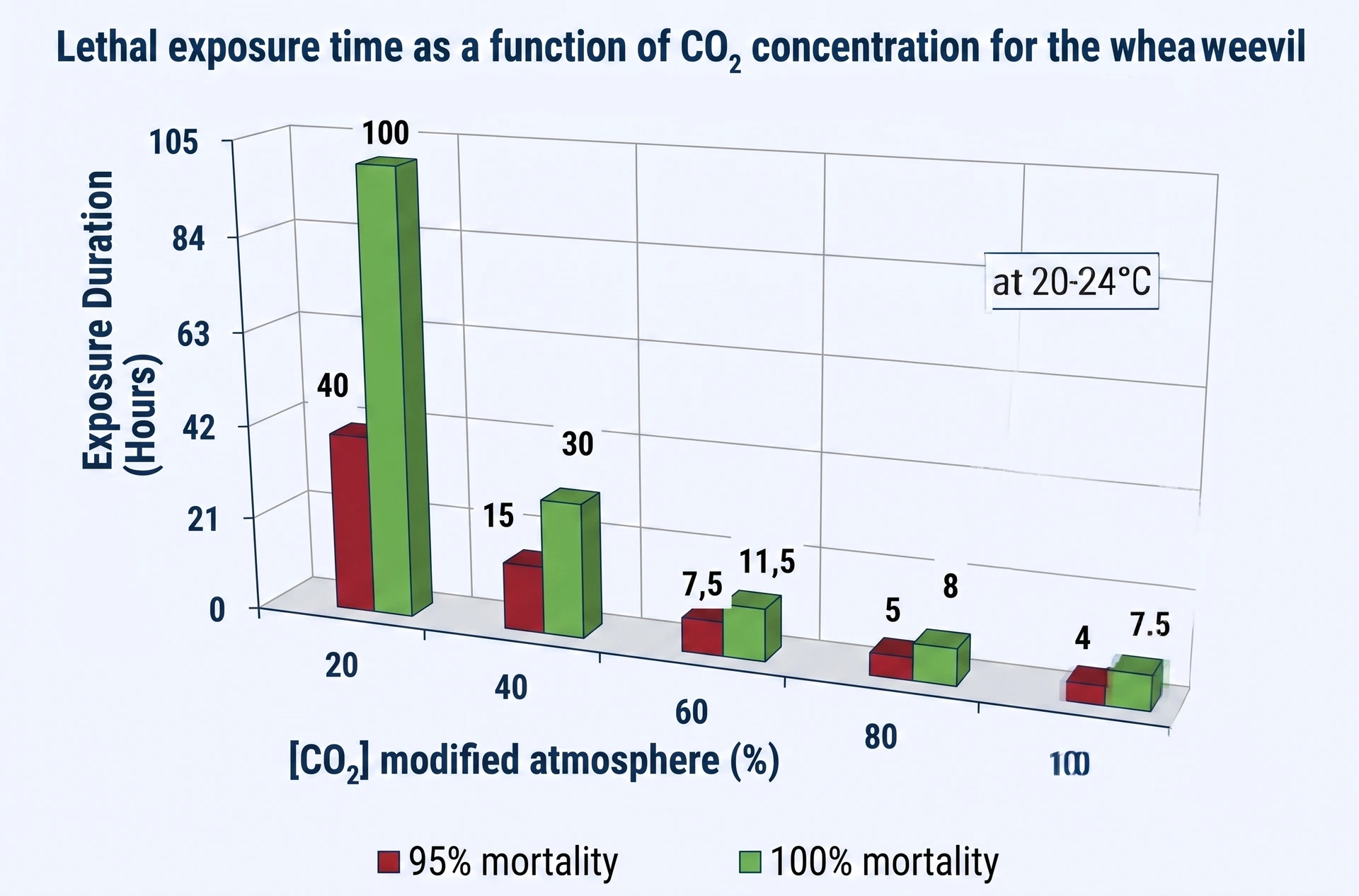
Effect of CO₂ content on grain weevil mortality rate (DEL = lethal exposure time) (data from Annis, 1987).
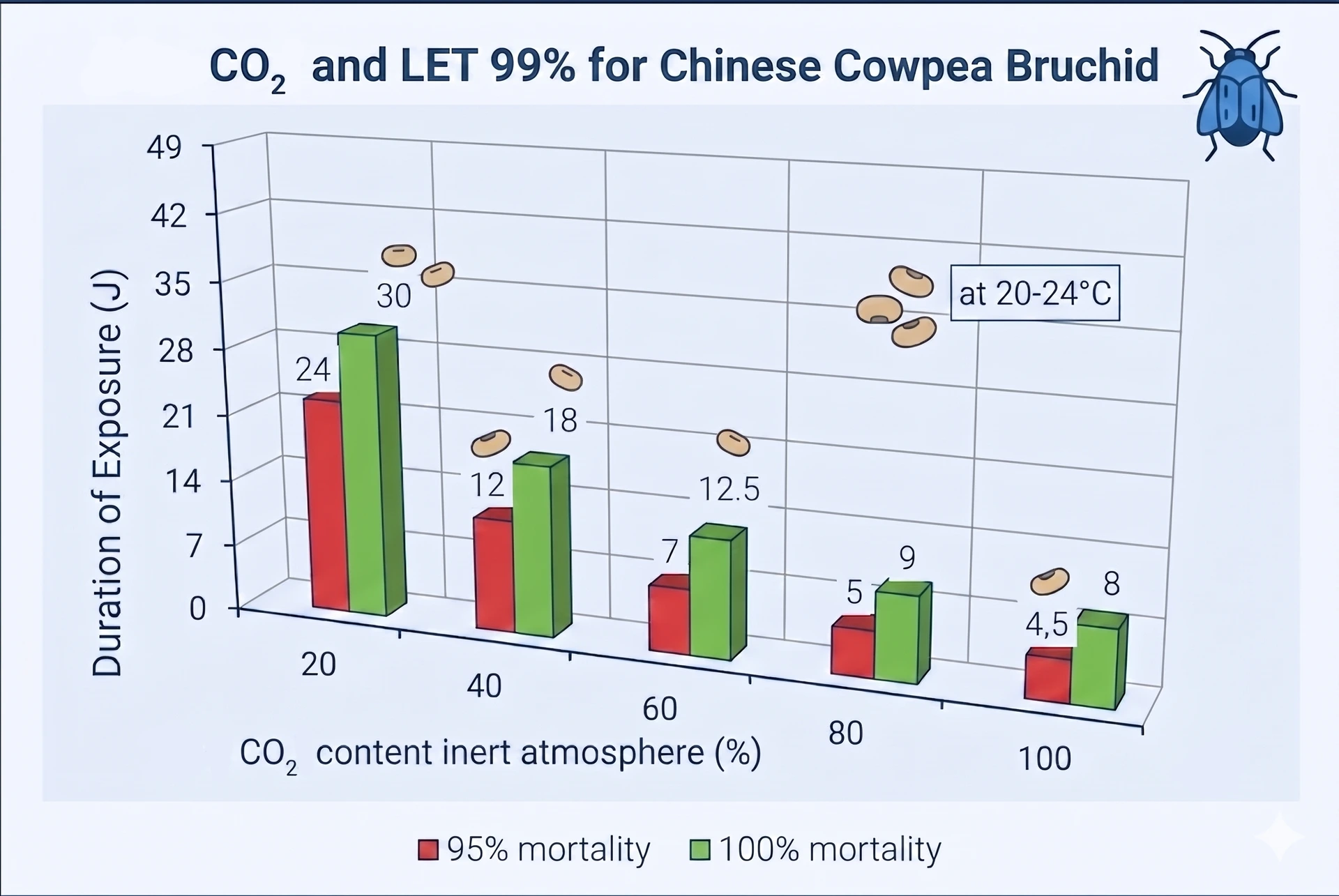
Effect of CO₂ content on the mortality rate of the Chinese bruchid (DEL = lethal exposure time) (data from Annis, 1987).
Influence of gas holding time on the mortality rate achieved.
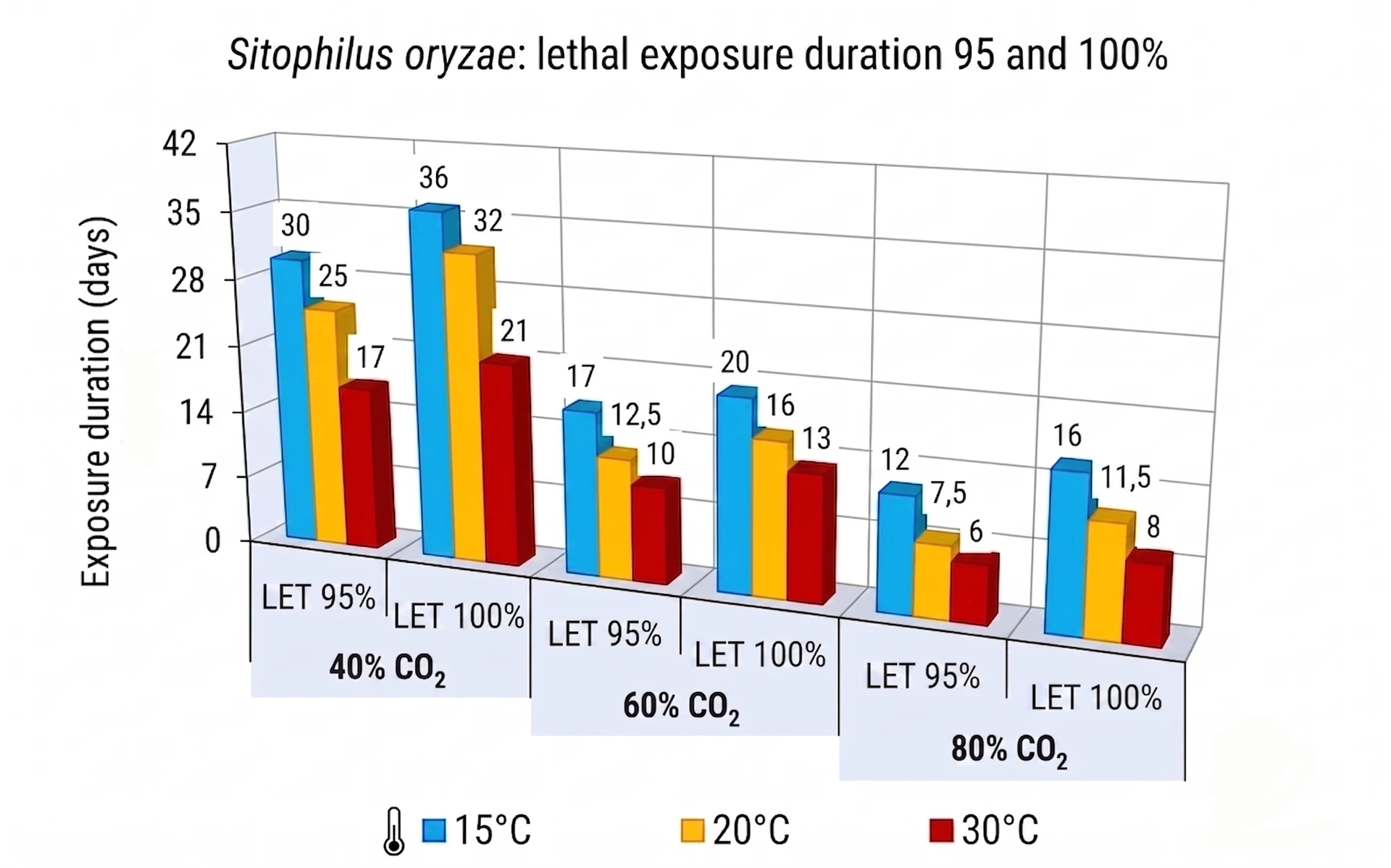
Influence of duration of exposure to a CO₂*-enriched atmosphere on the mortality rate of cereal weevils (data from Annis & Morton, 1997).*
Difference in sensitivity of different weevil development stages.
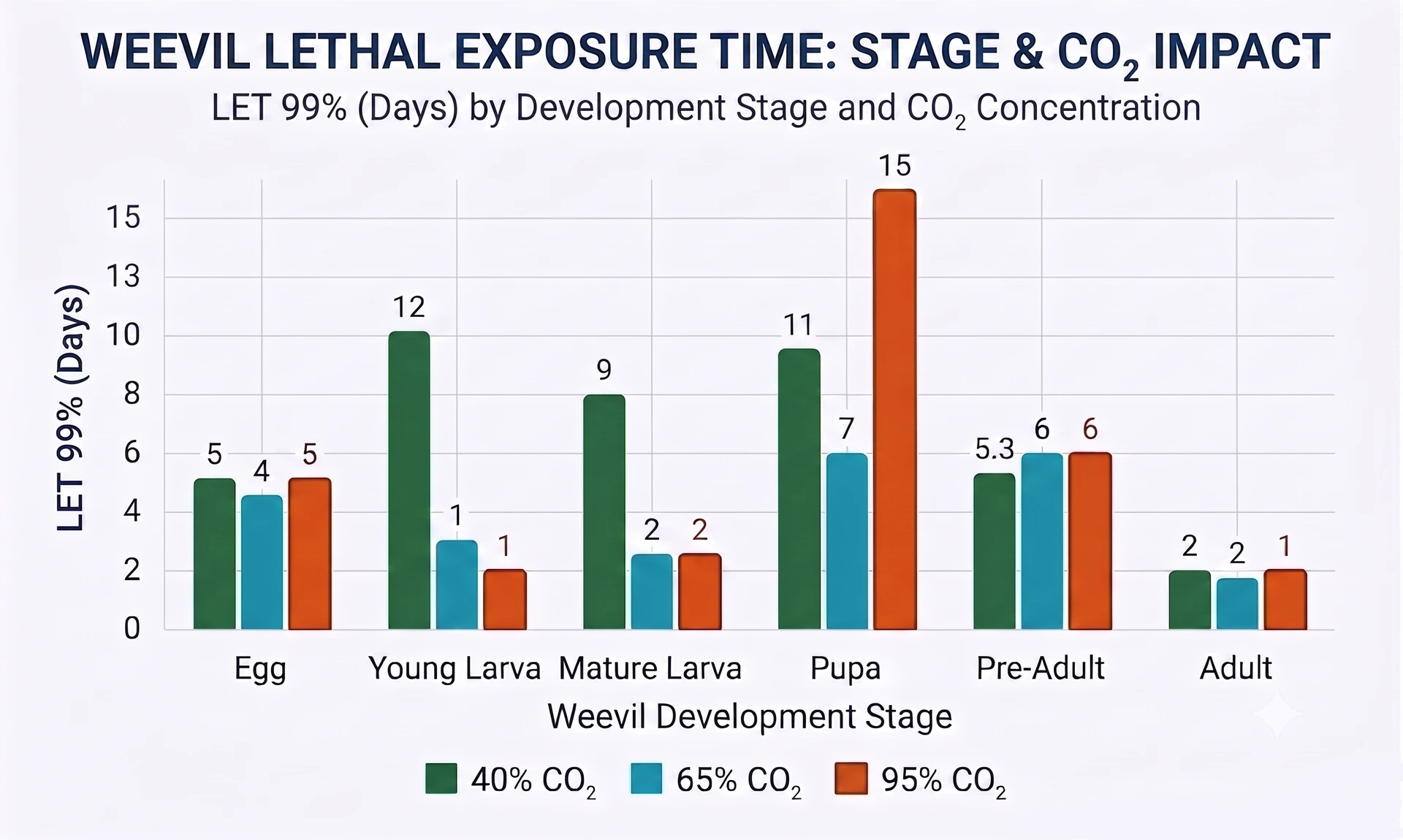
Relative sensitivity of different weevil development stages to exposure to CO₂*-enriched atmospheres (data from Annis & Morton, 1997).*
Conditions for optimum CO₂ inerting efficiency
The inherent insecticidal effect of CO₂ only manifests itself in the presence of a certain level of residual oxygen: exposing wheat grains infested by the hidden forms of the weevil, Sitophilus oryzae, to an atmosphere of pure CO₂ (100% CO₂) gives poorer disinsectisation results than an atmosphere of 50% CO₂, combined with 4, 10 or 20% oxygen (diazote excipient).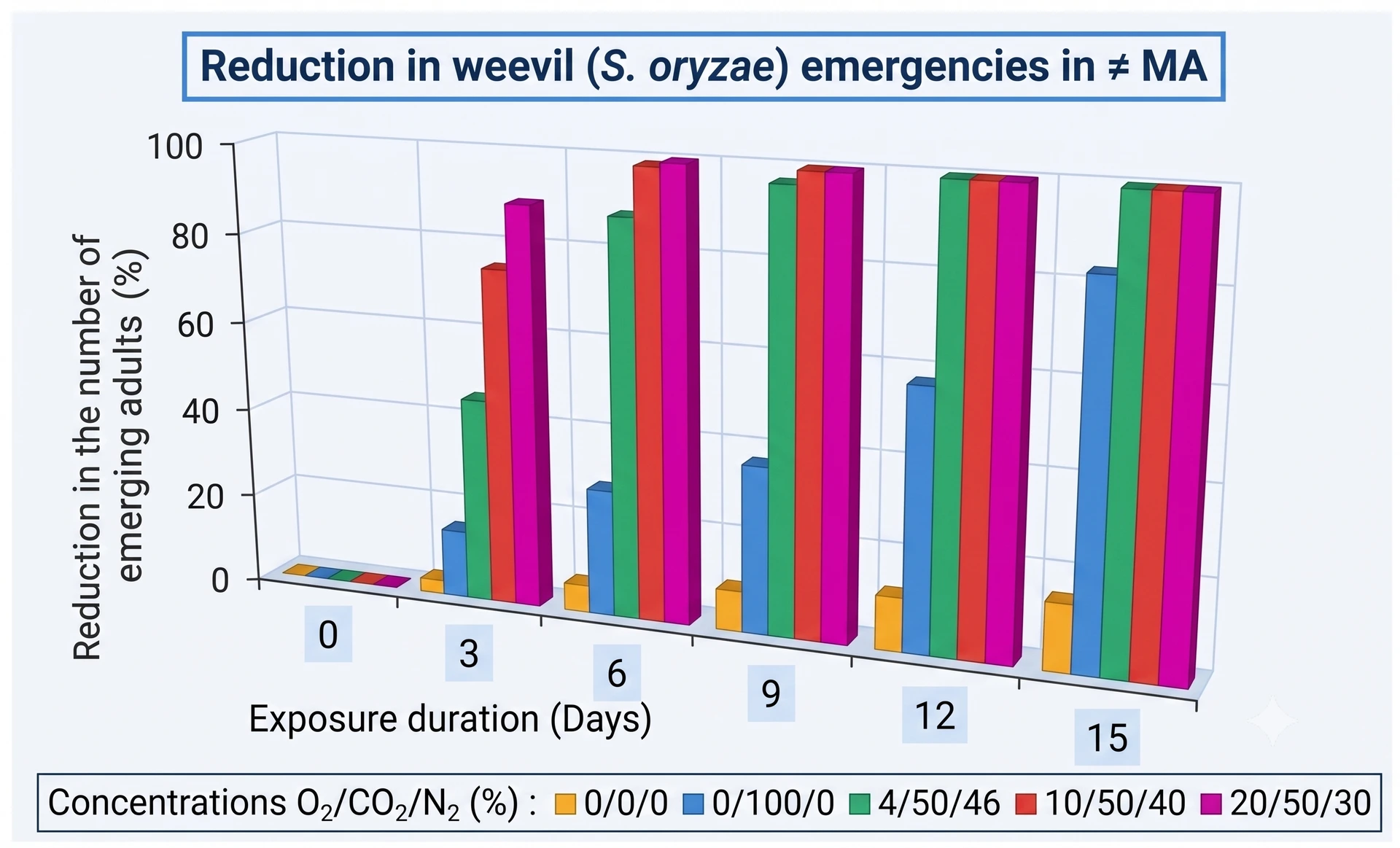
Reduction in emergence as a function of duration of exposure of wheat infested with hidden forms of the rice weevil (Sitophilus oryzae) to CO₂-modified atmospheres (from Fleurat-Lessard and Le Torc'h, 1991).