Weevils & grain beetles: main insect pests of stored cereals
Weevils, grain beetles, silvains and triboliums are the main pests. These species do not exist in the field and remain permanently on storage sites, particularly in handling equipment inaccessible to cleaning.
Weevils are the most dangerous insects for cereals because they are capable of attacking perfectly healthy grain and, apart from the adult, the other developmental stages live hidden inside the grain, unseen by the naked eye. They are referred to as primary pests. Thus, only the adults are visible, moving and multiplying within the grain mass. The other species with hidden forms, the grain beetle, develops more slowly than weevils, which always appear first in infested stocks.
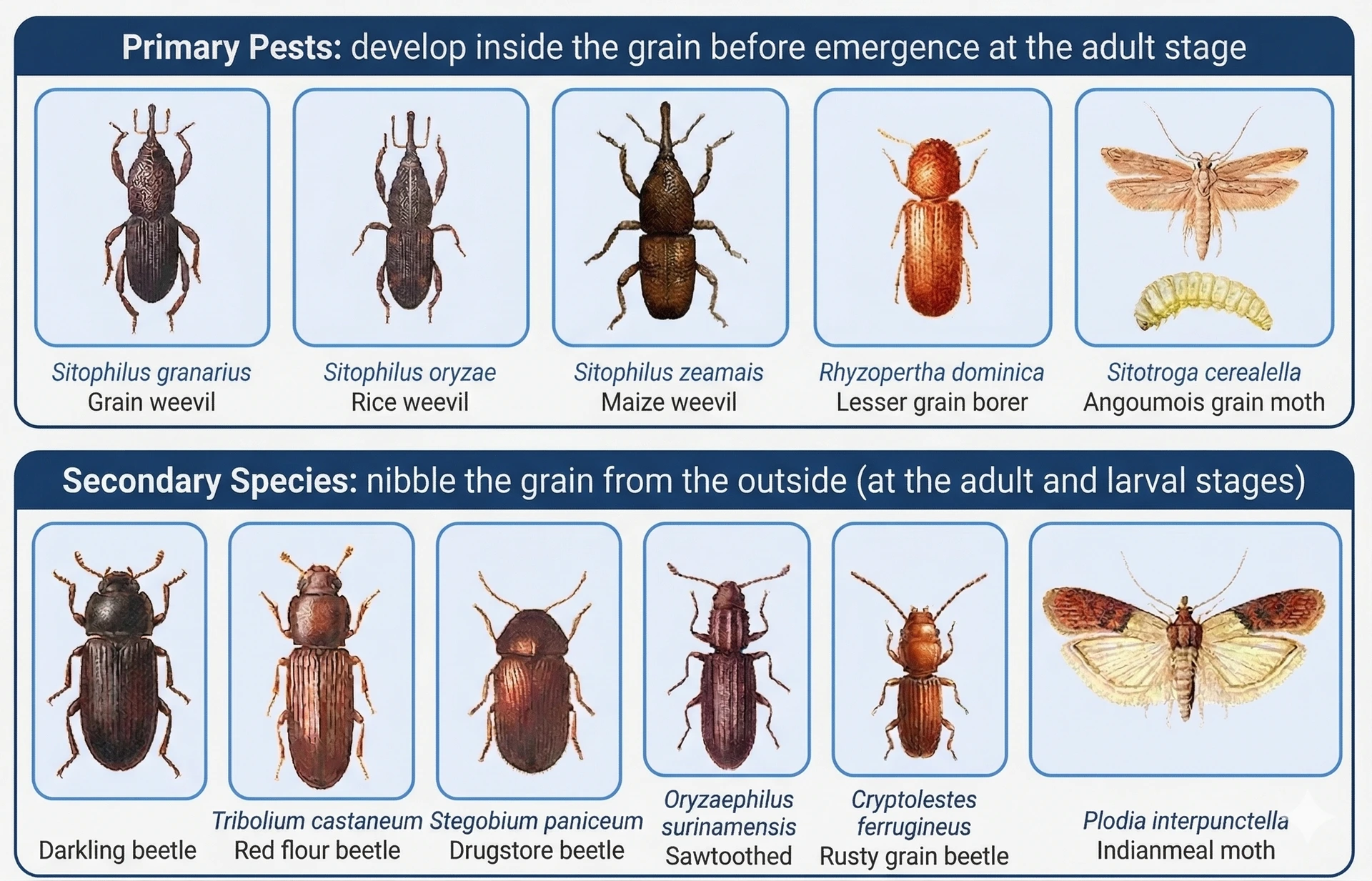
Main insect species that can infest cereals in post-harvest storage, classified into two groups of differing harmfulness.
Numerous insect species with different damage potentials can affect stored grain from the moment the storage begins.
Secondary species have no "hidden juvenile forms" and are much less damaging. These include silvains and Tribolium, which can be separated from the grain by thorough mechanical cleaning (e.g. with a cleaner-separator). They can also be found in sunflower seed.
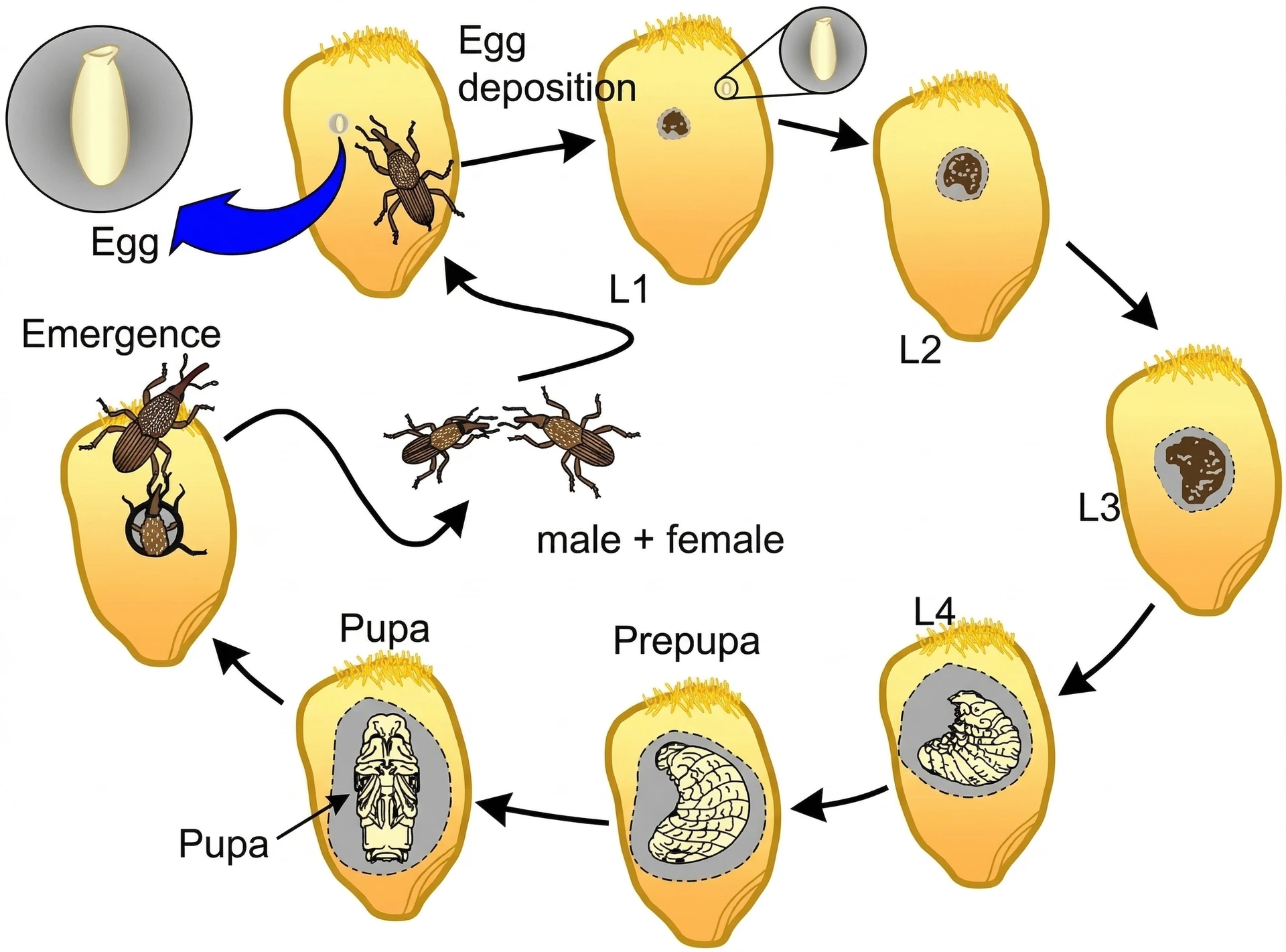
Weevil development cycle, with all juvenile stages (from egg to adult before emergence) hidden in the grain.
The speed of development depends on the temperature of the stored grain. Thus, taking the example of the most widespread weevil in cereal silos, the rice weevil (which attacks all cereal species equally well), in one year of storage, the initial population at cell placement can be multiplied by 1000.
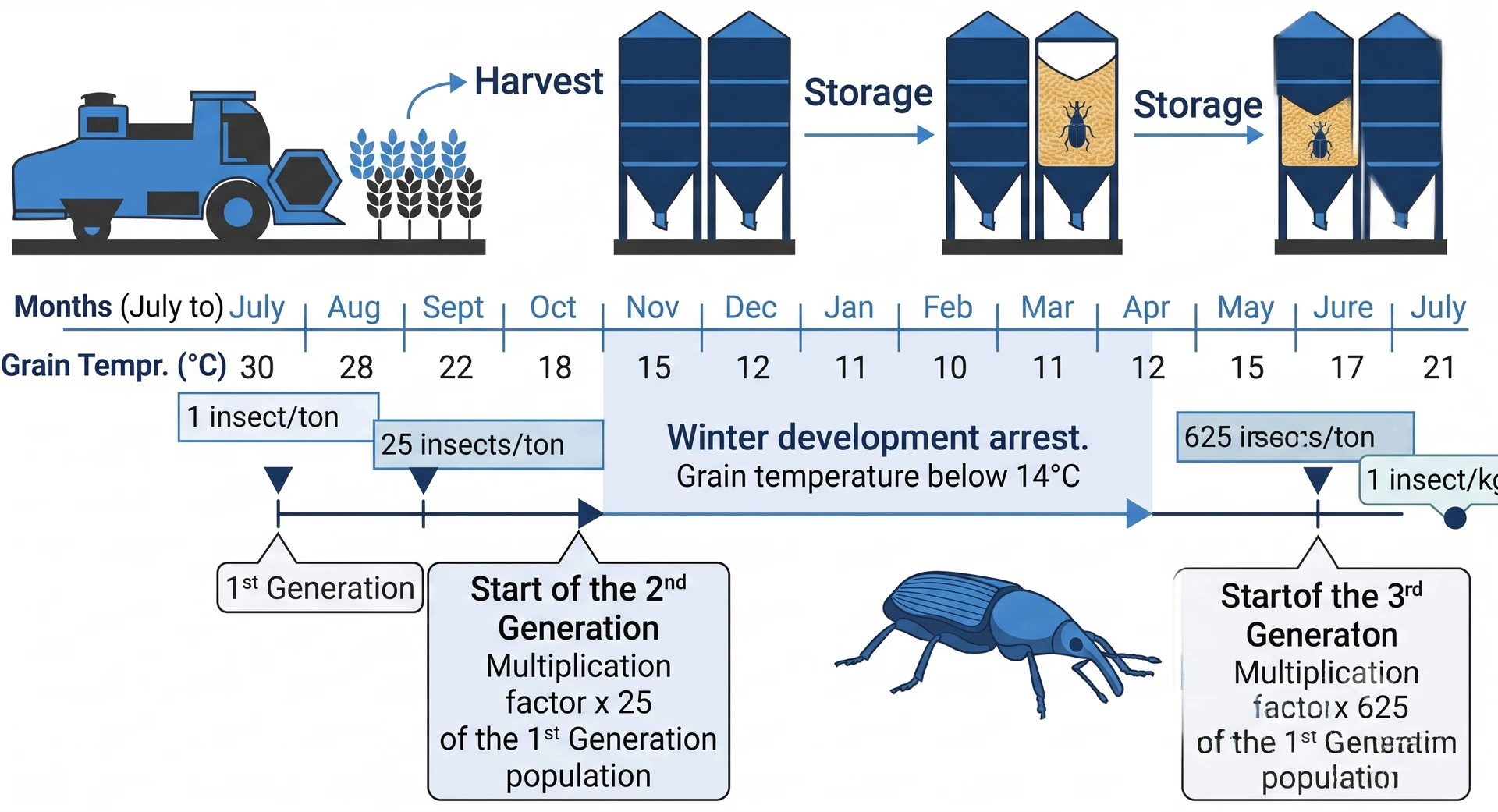
The main danger of weevils: their potential to multiply by 1 000 over a full year of cereal storage.
Below 12°C, insects go into hibernation (also known as "thermal quiescence") and stop moving and reproducing. All that's needed, therefore, is to cool the stored grain masses to this threshold temperature or below, and manage the insects by prevention.
An infestation of one insect per tonne of grain (a common situation in vertical silos with complex handling circuits) proliferates when grain temperature remains above 15°C, eventually approaching a density of one insect per kg of grain (100% detectable on a representative sample) after 12 months of storage without intervention.
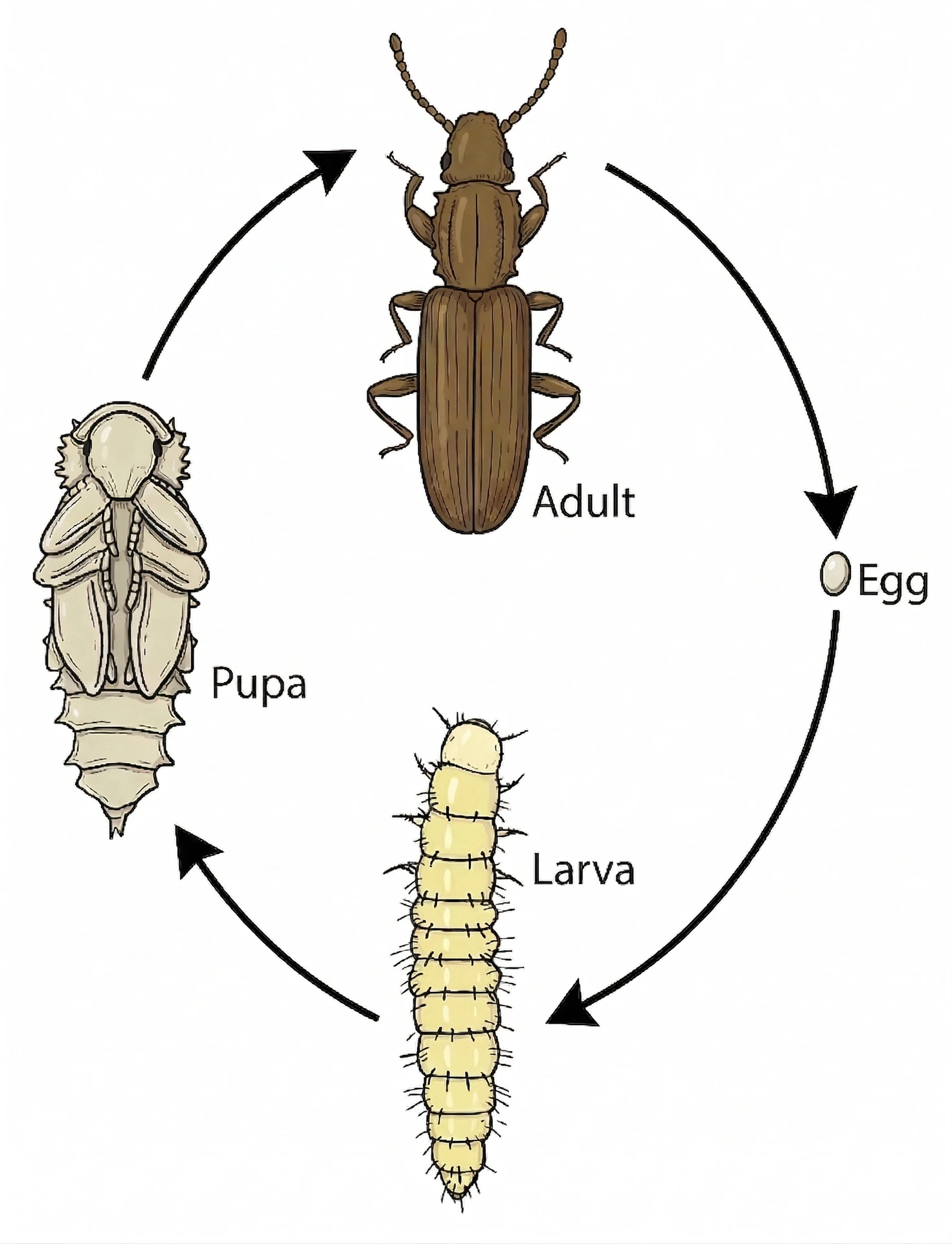
Development cycle of a secondary species without hidden forms.